Jun 17, 2022
Vanillin, molecular formula C8H8O3, molecular weight 152.14, scientific name 3-methoxy-4-hydroxybenzaldehyde (3-methoxy-4-hydroxybenzaldehyde), Vanillin, also known as citronellal. It is the aroma component of vanilla bean.
, which was successfully synthesized in 1874 by Dr. M. Hallmann and Dr. G. Taiman of Germany.
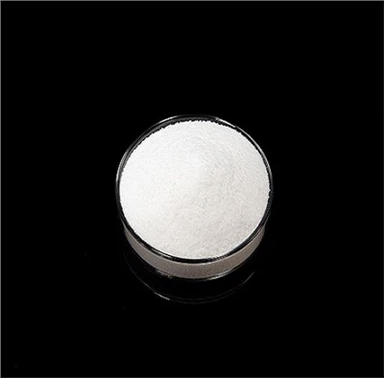
Exist in sugar beet, vanilla bean, benzoin gum, Peru balsam, Tolu balsam, and so on. is an important spice. White needle crystal or light yellow crystal powder. Has a strong aroma. The melting point is 80-81 degree , and the boiling point is 285 degree . The density was 1.056 g/cm. Slightly soluble in cold water, soluble in hot water, soluble in ethanol, ether, chloroform, carbon disulfide, glacial acetic acid, etc. Its aqueous solution is blue-purple when it encounters ferric chloride.
1. Edible flavoring: Vanillin is an edible flavoring agent, which has the aroma of vanilla bean and a strong milky aroma, and is an indispensable and important raw material in the food additive industry.

. At present, China's vanillin consumption: in the food industry accounts for 55%, pharmaceutical intermediates account for 30%, feed seasoning accounts for 10%, and cosmetics account for 5%.
2. Used as a fixative, coordinator, and conditioner, widely used in cosmetic essence;
3. It is used as a fragrance and fixative for cosmetics, as well as a food fragrance and flavoring agent. It is also an antiepileptic drug. This product can resist the convulsions caused by pentylenetetrazol, inhibit epileptiform cerebral epilepsy induced by pentylenetetrazol, and can still inhibit the spontaneous activity of animals and prolong sleep time of cyclohexene barbital sodium. It has sedative and antiepileptic effects. For the treatment of various epilepsy, especially for petit mal seizures. In addition, it can also be used for ADHD, vertigo, and so on. The preparation is a tablet.
4. Vanillin has a wide range of uses. It is used as a fragrant raw material, a flavoring agent, or a fixative in the food, daily chemical, and tobacco industries. Among them, beverages, candies, cakes, biscuits, bread, and roasted seeds and nuts are used in the majority. There are no reports that vanillin is harmful to humans. It is an edible flavoring agent that creates a strong milky scent.
5. Vanillin is one of the important edible spices, the largest variety in the spice industry, and the main ingredient of the popular creamy vanilla essence.

1. Vanillin can be generally divided into methyl vanillin and ethyl vanillin. Commonly referred to as vanillin is methyl vanillin (vanillin), chemical name 3-methoxy-4-hydroxybenzaldehyde, chemical formula: C8H8O3, CAS No.: 121-33-5, FEMA: 3107.
White or slightly yellow needle-like crystal, melting point is 81-83 degree , the boiling point is 284 degree , flash point is greater than 147 degree , slightly soluble in water, soluble in ethanol and perfume. It has a sweet and powdery bean aroma, slightly spicy but dry, vanilla aroma, and rich milky aroma, and the fragrance lasts for a long time.
2. Physicochemical properties Vanillin has a strong and unique vanilla bean aroma and is naturally present in vanilla bean pods, as well as in clove oil, oakmoss oil, Peru balsam, turmeric balsam, and benzoin.
3. White to light yellow crystalline powder or needle-like crystals are precipitated from sulfite coniferous tree pulp red liquor or lignosulfonate under alkaline conditions after high-pressure oxidative hydrolysis. Those precipitated from petroleum ether can also generate tetragonal crystals. Aromatic. Slightly sweet. It is gradually oxidized in the air.
4. Decomposition in case of light. In case of alkali discoloration. The relative molecular mass is 152.15. Relative density 1.056. The melting point varies depending on the crystal form, the tetragonal system is 81-83 degree , the needle-like crystal is 77-79 degree , the boiling point is 285 degree (in carbon dioxide gas), 170 degree (2.00×10³Pa), 162 degree (1.33×10³Pa), 146 degree (0.533×10³Pa).
Sublimes without breaking down. Flashpoint 162 degree . Slightly soluble in cold water, soluble in hot water, easily soluble in ethanol, ether, acetone, benzene, chloroform, carbon disulfide, glacial acetic acid, pyridine, and volatile oils.
5. The aqueous solution reacts with ferric chloride to form a blue-violet solution. Rat oral LD501580mg/kg, rat percutaneous LD501500mg/kg. The industrial production method is that eugenol generates isoeugenol in the presence of potassium hydroxide, and then reacts with acetic anhydride to generate isoeugenol acetate, which is then prepared by oxidation and hydrolysis.
merchandise in recent years. Using the eugenol extracted from clove oil or clove basil oil as raw material, the vanillin obtained by isomerization and oxidation is called natural grade vanillin because it can be regarded as the natural equivalent. In the market, its price is about 5 times that of synthetics.